


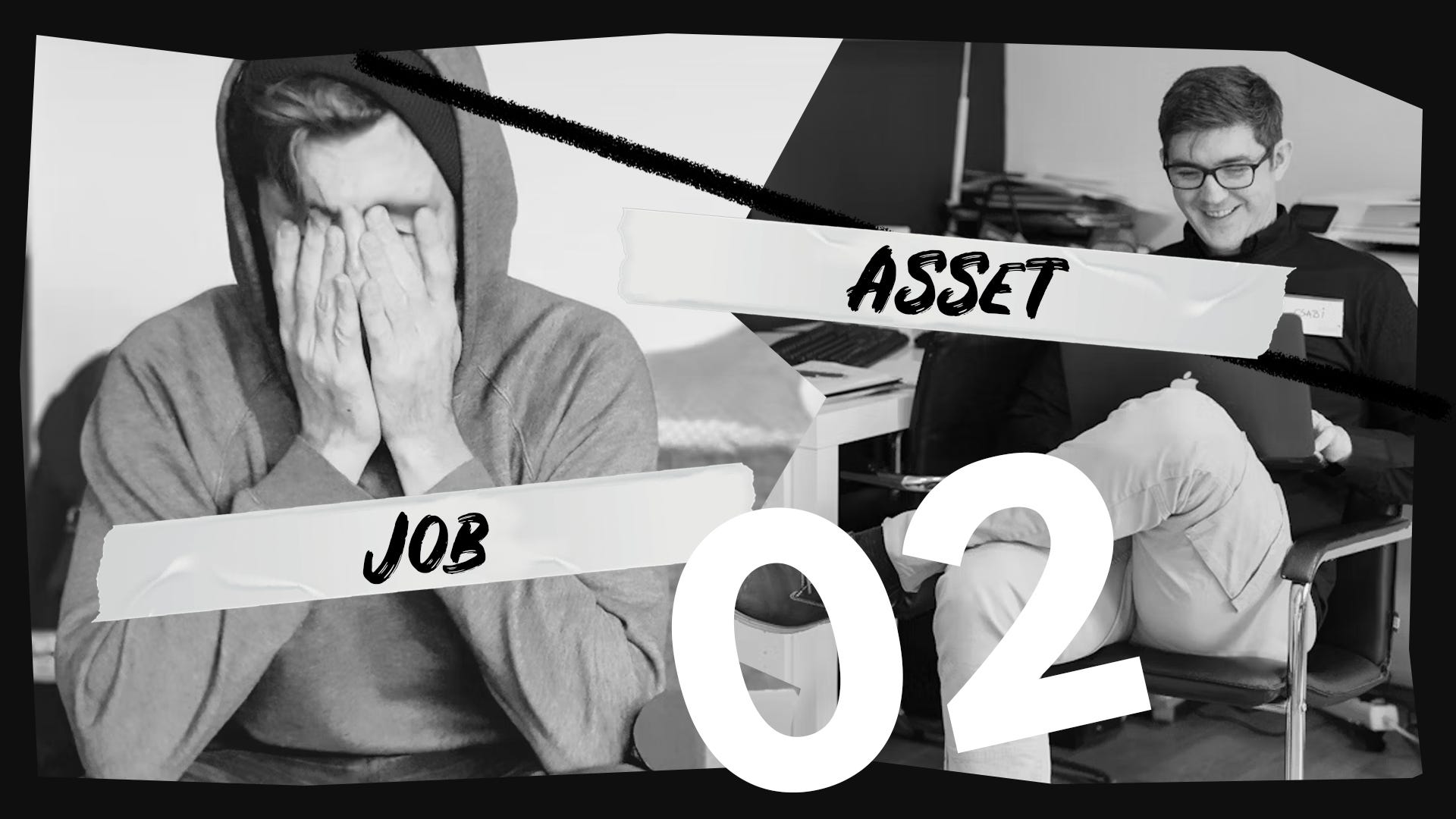
When most creatives decide to quit their full-time job and go off on their own, they think they’re building a business. But more often than not, what they’re really building is a job. A good job, maybe even a great one—but still a job. And the distinction between a job and a business asset is one of the most important lessons you can learn as a creative entrepreneur.
Because here’s the truth: if what you’re building depends entirely on you showing up every day, then you don’t own a business. You own your job. And that job will disappear the moment you stop working.
The Job Disguised as a Business
I learned this the hard way. In my early years, I called myself a studio. It sounded impressive, like I was running a full-fledged company. But in reality, it was just me, a computer in my 1-bedroom apartment, and a small, but growing list of clients. I was doing all the work, managing all the projects, sending all the invoices, and answering every email. I had no real systems in place. If I got sick, projects stalled. If I wanted to take a vacation, my income stopped. My “studio” wasn’t a studio at all—it was just me with a shinier title.
This is what I call building a job disguised as a business. You might feel independent. You might even be making more money than you did as an employee. But at the end of the day, you’ve just created another job for yourself, one with longer hours and more stress.
What an Asset Looks Like
A business, on the other hand, is an asset. An asset is something that continues to generate income even when you’re not present. It’s something with systems, processes, and people that allow it to operate independently of you.
Think about it: if you took two weeks off right now, would your business keep running? Would clients still be served? Would invoices still be paid? If the answer is no, then you don’t have an asset yet.
An asset has value beyond you. It can be sold, scaled, or passed on. A job cannot. That’s the difference.
Why the Distinction Matters
The distinction matters because it changes the way you make decisions. If you’re building a job, you’ll prioritize short-term wins: billable hours, immediate client projects, and keeping busy. But if you’re building an asset, you’ll prioritize long-term sustainability: repeatable systems, hiring, client retention, and brand equity.
Jobs die when you stop working. Assets live on.
This mindset shift is also crucial for your family. When I thought about what would happen if I got sick or, worse, died, it was sobering. If everything depended on me, my family would be left with nothing. But if I built a true business asset—something that could be sold or continued—then all the years of effort wouldn’t vanish overnight.
From Job to Asset: The Transition
So how do you transition from building a job to building an asset? Here are a few practical steps:
Systematize Everything – Write down how you do what you do. If someone else can follow your playbook, you’re on your way to an asset.
Delegate Tasks – Start with small things: bookkeeping, design tweaks, client emails. Free your time for high-value work.
Think Scale, Not Just Survival – Stop asking, “How do I get through this month?” and start asking, “How do I build something that lasts 10 years?”
Hire for Fit, Not Just Skill – A team isn’t just extra hands. It’s people who can carry your culture and your values forward.
Invest in Relationships – An asset business doesn’t just sell deliverables; it sells trust, consistency, and reliability. Strong client relationships outlast any one project.
Examples of Job vs. Asset
Job mindset: You design logos for $1,000 each. If you stop, no logos get made.
Asset mindset: You build a branding agency where designers work with clients under your systems. Even when you’re away, logos (and revenue) keep flowing.
Job mindset: You freelance as an animator. Each project is yours alone to complete.
Asset mindset: You run a studio with producers, designers, and animators, and projects move forward even when you’re not touching every frame.
The difference is independence versus interdependence.
The Freedom Factor
Ironically, most creatives go freelance for freedom. But true freedom doesn’t come from being your own boss—it comes from owning an asset. Freedom is being able to take a week off without panicking about money. Freedom is knowing that if life throws you a curveball, your income doesn’t vanish. Freedom is working on what excites you most, not just what pays the bills.
And that freedom only comes from building an asset.
Final Thoughts
If you’re freelancing right now, don’t panic—you’re not doing it wrong. Freelancing is often the first step toward building something bigger. But don’t stop there. Don’t mistake your job for a business. Think long-term. Start building systems, relationships, and a team. Start building an asset.
Because one day, you won’t want to work 60 hours a week just to keep the lights on. You’ll want to rest, to take care of your family, to maybe even sell what you’ve built. And when that day comes, you’ll be glad you built a business that lasts, not just a job with a fancy title.